In 2019, alongside the evaluation process conducted by national structures, CICANT initiated a process aimed at adopting and implementing procedures and mechanisms for internal quality assurance, with the goal of strengthening the Centre's activities, supporting its researchers, and fostering new scientific achievements.
Following the evaluation carried out in 2024/2025 and in line with the new strategic directions, the Centre decided to expand the External Advisory Board to a group of five specialists. These experts are internationally recognised within the academic community for the impact of their work in their respective fields of expertise, which are closely aligned with the strategic objectives of the unit.
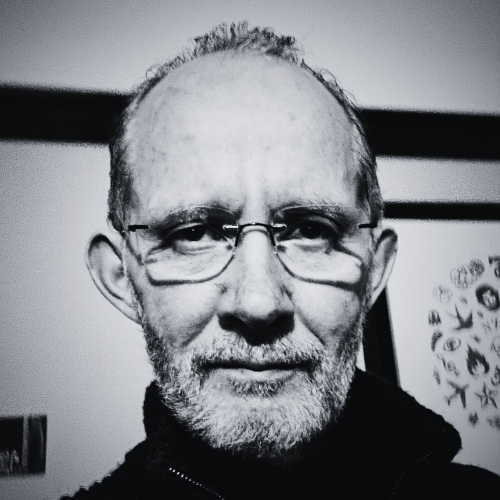
Members of the 2025-2029 External Advisory Board
Bruce Sheridan
Professor Bruce Sheridan is a drama and documentary filmmaker. He teaches directing in the Columbia College Chicago School of Film and Television, where he was Film and Video Chair 2001-2017. He served as CILECT North America (CNA) Regional Council Chair 2014-2018 and CILECT President 2018-2024. He is currently Chair of the CILECT Developing Technologies Standing Committee. Professor Sheridan has directed and produced feature and short documentaries, including Perfectly Frank, Spellbound, and Head Games, and won the 1999 New Zealand Best Drama Award for the tele-feature Lawless. He draws from philosophy of mind and cognitive psychology to investigate predictive mind, learning, and AI in audiovisual media education. His creativity research focuses on play, collaboration, and improvisation.
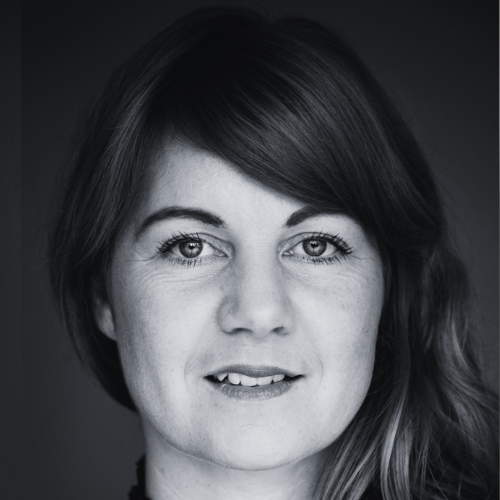
Janie Møller Hartley
Jannie Møller Hartley is a professor in Journalism and Media Use at Roskilde University, Denmark. Her research is situated in between the fields of Journalism Research, Audience Studies and Data Science. She is concerned with governance by algorithms, critical data studies, datafied everyday lives and the role of journalism in the age of datafication with a particular focus on democratic publics. Møller Hartley is the PI of the research projects AUTOPUBLICS (funded by the Danish Research Council) and the project 'Safeguarding Diversity in News Recommender Systems' (funded by the Villum Foundation) and the head of the Centre for AI and Data. Currently she is writing the book 'Just for you' - Inside the News Personalization Machine which ethnographically explores the impact of algorithmic systems and AI on news production and news use.
Johan Siebers
Johan Siebers is Professor of Philosophy of Language and Communication at Middlesex University London and Director of the Ernst Bloch Centre for German Thought at the Institute of Languages, Cultures and Societies of the School of Advanced Study, University of London. He is founding and principal editor of the European Journal for Philosophy of Communication (Empedocles), published in cooperation with ECREA's Philosophy of Communication Section. He is co-editor of Routledge Research in Anticipation and Futures and editor of the Bloch Bibliothek in Brill's Historical Materialism book series.
His research is located at the crossroads of philosophy, rhetoric, linguistics and communication studies, in particular conceptions of dialogue and the link between communication and futurity, including environmental futures. Central to his work is the idea that communication presents a fundamental challenge to inherited modes of philosophical thought.
Full profile

Nico Carpentier
Nico Carpentier is Extraordinary Professor at Charles University (Prague, Czech Republic), a Visiting Professor at Tallinn University (Estonia) and President of the International Association for Media and Communication Research (2020-2024). His theoretical focus is on discourse theory, his research is situated in the relationship between communication, politics and culture, especially towards social domains as war & conflict, ideology, participation and democracy. He frequently uses arts-based research methods, as a hybrid scholar, artist and curator. His latest monographs are The Discursive-Material Knot: Cyprus in Conflict and Community Media Participation (2017, Peter Lang, New York) and Iconoclastic Controversies: A Photographic Inquiry into Antagonistic Nationalism (2021, Intellect, Bristol).
The most recent special issues he edited are Arts-based Research in Communication and Media Studies (2021, with Johanna Sumiala) in Comunicazioni Sociali and Mediating Change, Changing Media (2022, with Vaia Doudaki and Michał Głowacki) in the Central European Journal of Communication. His last exhibitions were The Mirror of Conflict photography exhibition in October 2023 at the Energy Museum, in Istanbul, Türkiye, and the Moulding Nature arts exhibition in Färgfabriken in Stockholm, Sweden.
Full profile
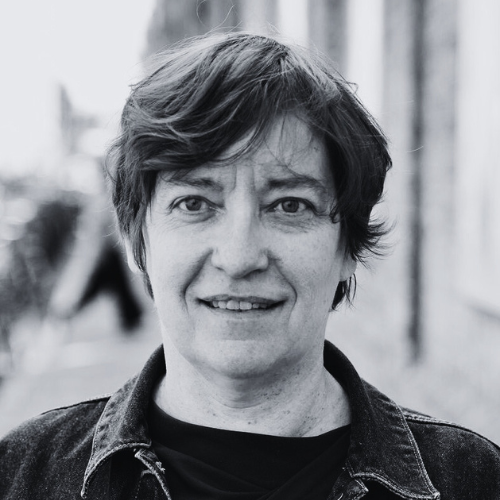
Veerle Van der Sluys
Veerle Van der Sluys is the president of LUCA School of Arts. Veerle (Doctor in Physics, Ghent University, 1995) has a passion for software development, web applications and new media applications. Her interest in technology development arose during her academic years as a PhD student and postdoctoral fellow at Ghent University. During this period she developed advanced computer simulations for nuclear reactions.
She left this academic environment in 1997 and lived in the United States with her family for several years. She kept on specializing in new technological developments and took additional courses at New Jersey Institute of Technology in Newark in computer science, Java and related web technologies. Back in Europe, she started working as a software architect for Case Consult (later USWeb/CKS Belgium ), AP&P and Actonomy. During this period she learned how to handle more complex software projects in practice.
Meanwhile she remained active in various research projects. Her academic background in combination with her technological knowledge allows her to play an essential role in the translation of research results into precise technology requirements.
Since June 2009, Veerle has been employed at LUCA School of Arts/Associated Faculty of Arts (KU Leuven). Her research and teaching mainly focuses on the interplay of art, design and technology.
Since January 1, 2016, she has been responsible for the LUCA-wide policy on artistic research in her role as Vice Dean Research. This mandate ended in August 2024.
The EAB acts as a sounding-board for the Board of Directors helping the Centre gain new insights and advice to overcome difficulties and or fragilities and explore new opportunities by stimulating robust, high-quality critical thinking and analysis.
The EAB's intervention so far has focused on two specific moments. In 2019, where an initial assessment of the Centre, of our activities and proposals for the future was carried out, meeting face-to-face, in Lisbon, both with the Board and with the integrated researchers and PhD students. And in a second and more recent moment, in 2021, where in a format adjusted to online, it had the possibility to interact with the same stakeholders, evaluating the progression curve of the Centre's activities, comparing the current panorama with that which was analysed in 2019.
From these moments of critical reflection and constructive dialogue, reports and recommendations are produced which are translated into measures that the Board, at the General Assembly, annually proposes and daily consolidates.